A trained leader without an ecosystem stalls. Excel builds the structure around them — so capability turns into companies instead of staying a plan on paper.
We spent years developing leaders and watched a pattern repeat: the person changes, and then the environment around them doesn’t. No mentors nearby. No cycle to join. No floor to build on. Nowhere for the next step to happen.
Excel is our answer. We build the missing environment where the talent already is — not where it is convenient — so that a leader who is ready has somewhere to go. Startup schools for the first-time founders. Accelerators for the ventures that exist. A venture factory underneath both.
Excellence that has nowhere to build stays an idea.
Excel is owned by KIMA Academy, alongside Lead — the same house that develops the leader also builds the room they walk into next. That is deliberate: the hand-off between learning and building is where most programs lose people.
Choose a block to see it, and who we build it with.
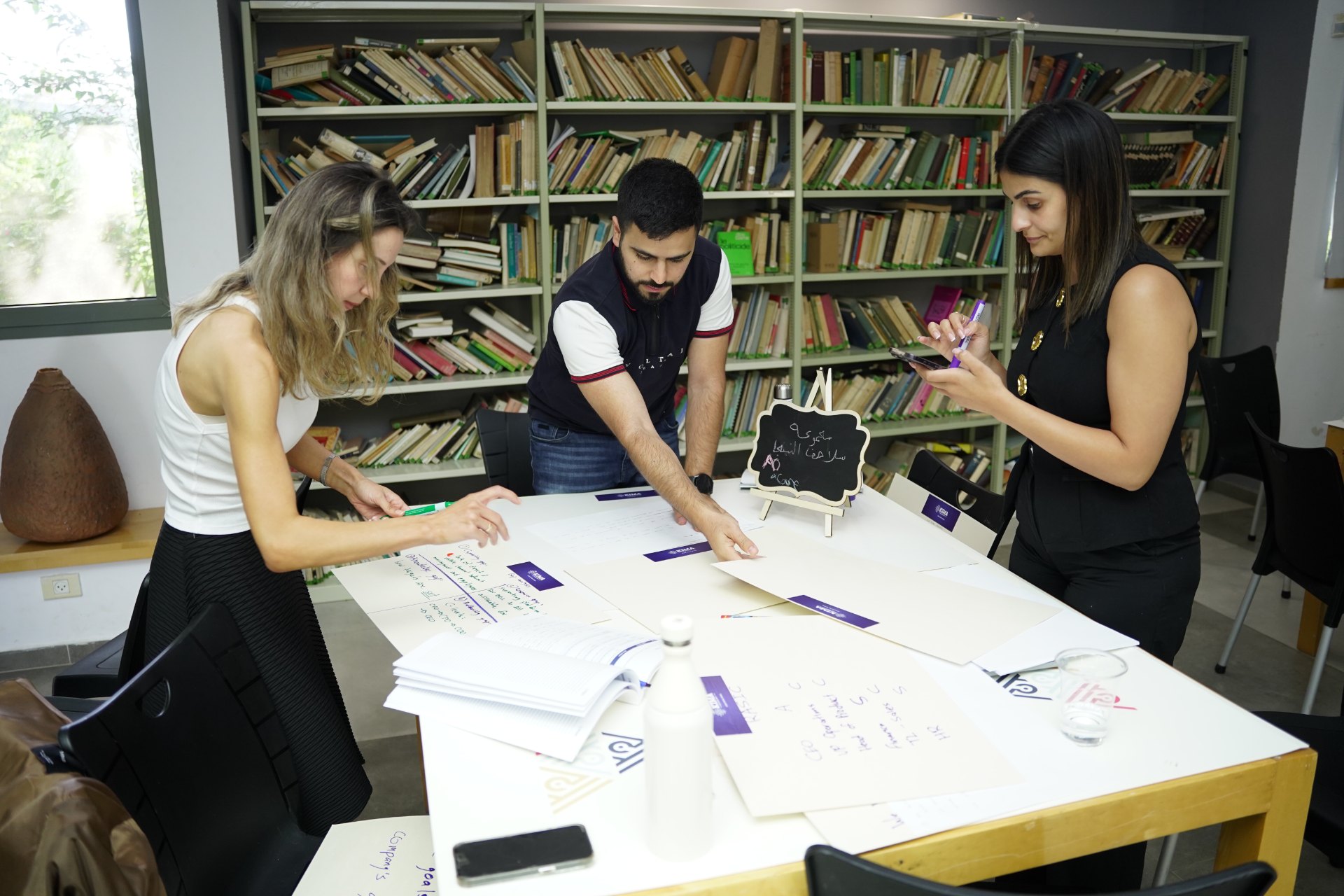
First-time founders learn to build in their own community, with local mentors and local problems — not a curriculum imported from somewhere with a different economy. The school is the on-ramp: it turns interest into a first venture, and a community into a place where building is normal.
Built with

Early ventures get structured cycles, capital readiness, and access to the KIMA Collective — a room of senior operators who have already made the decisions these founders are facing. Cycles run with our ecosystem partners, and the Scalerator sits at the top of the ladder for companies already ready to leave the local market.
Built with



The shared floor where ventures are started, staffed and taken through their first cycles. Not a co-working space — a build capability: shared operators, shared hiring, shared go-to-market, so a founding team of two can move like a team of ten and a venture does not die of overhead in its first year.
Built with

KIMA Academy Excel built the first startup school in the Bedouin community, in the south.
It is the clearest test of the belonging idea: a place where a community builds its own ventures, on its own terms, rather than waiting to be included in someone else’s. Local founders. Local mentors. Local problems worth solving. And a room that stays open after the first cohort leaves.
It is also the proof that the model travels. If the structure works in a community the innovation economy usually skips, it works anywhere we choose to build it next.
Each collaborator carries one part of the road. Together they carry all of it. These are the six ways organisations join us.
Join a cohort, build a venture, and stay inside the Collective long after the program ends.
Create internal change leaders. In an AI-centric age that capability is a need, not a perk: change leaders decide whether the shift succeeds.
Develop your own leadership bench through KIMA Academy programs, in-house or as offsites.
Stand up startup schools and innovation ecosystems in the communities that need them most.
Grow belonging and turn impact challenges into opportunities — backing people who learn from the support and pay it forward through entrepreneurship.
Open markets with KIMA Scale, and co-invest in the companies coming through it.
Who we collaborate with












 Pillar one · LEAD
KIMA Academy is the academic arm of KIMA LBE and its own destination — the ELM program, the faculty of practitioners, the Fellows network, and the full application journey all live there.